Pressure Sore Prevention After SCI
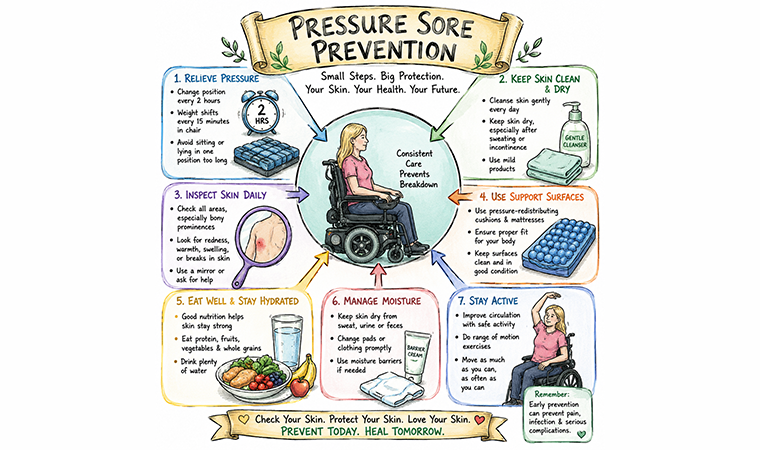
When you have a spinal cord injury taking care of your skin has to be a daily priority from the very beginning. Prolonged pressure on the skin damages underlying tissue, especially on the bony parts of your body where you don’t have a lot of skin: heels, ankles, elbows, hips, shoulder blades, and the tailbone.
A pressure ulcer shows up as a red mark on the skin. Red, unbroken skin can quickly become a deep injury involving muscle and bone which takes months, and in some cases years to heal.
How Do We Avoid Pressure Wounds?
- In bed, roll to the side or even partially to one side. Wedge a pillow under your back to keep pressure off the tailbone
- Change positions for pressure relief every few hours. Later, when you are able to transfer to a chair, use features to frequently lean and tilt into different positions.
- Don’t lay on pads in bed. Use a draw sheet to be moved in bed, and disposable incontinence pads only.
- Use a mattress designed to provide pressure relief.
- Don’t cover wounds that aren’t open unless otherwise instructed by a doctor.
- Keep skin clean and dry.
- Put pillows under your calves to float your heels in bed or use protective foot-drop prevention boots.
- Check skin daily. Push on red mark and make sure it blanches (turns white for a second) when you remove pressure
- If a red mark persists for 48 hours, involve a wound doctor.
The hospital should perform a pressure wound risk assessment when determining whether an alternating air mattress should be used anytime you visit the hospital. Insist on this assessment. A head-to-toe skin assessment should be conducted as soon as possible upon admission and at least daily thereafter, paying special attention to bony prominences.
Unfortunately, way too often the hospital is where people with spinal cord injuries end up sustaining pressure sores. Know your rights. If you have developed a pressure sore during the hospital stay, let us know. The Spinal Cord Injury Law Firm launched the legal and advocacy initiative “Stop Pressuring Us” in 2024 as a national advocacy effort focused on preventing pressure injuries among people with spinal cord injuries in hospitals and care facilities. Check out scipressuresores.com and share your story.
Pressure wounds are a big deal. Quadriplegics who have won the fight with pressure wounds recommend using DermaWound, an iodine based solution that yields incredible results when used as directed. You can buy an 8 ounce tub at a really affordable price at dermawound.com. We also like Medihoney, silver nitrate, calcium alginate, collagen powder and stem cell therapy. See what your products your health insurance will approve.
Consuming enough protein is very important for healing as well. We like products like Prostat and Juven.

 Phone: